
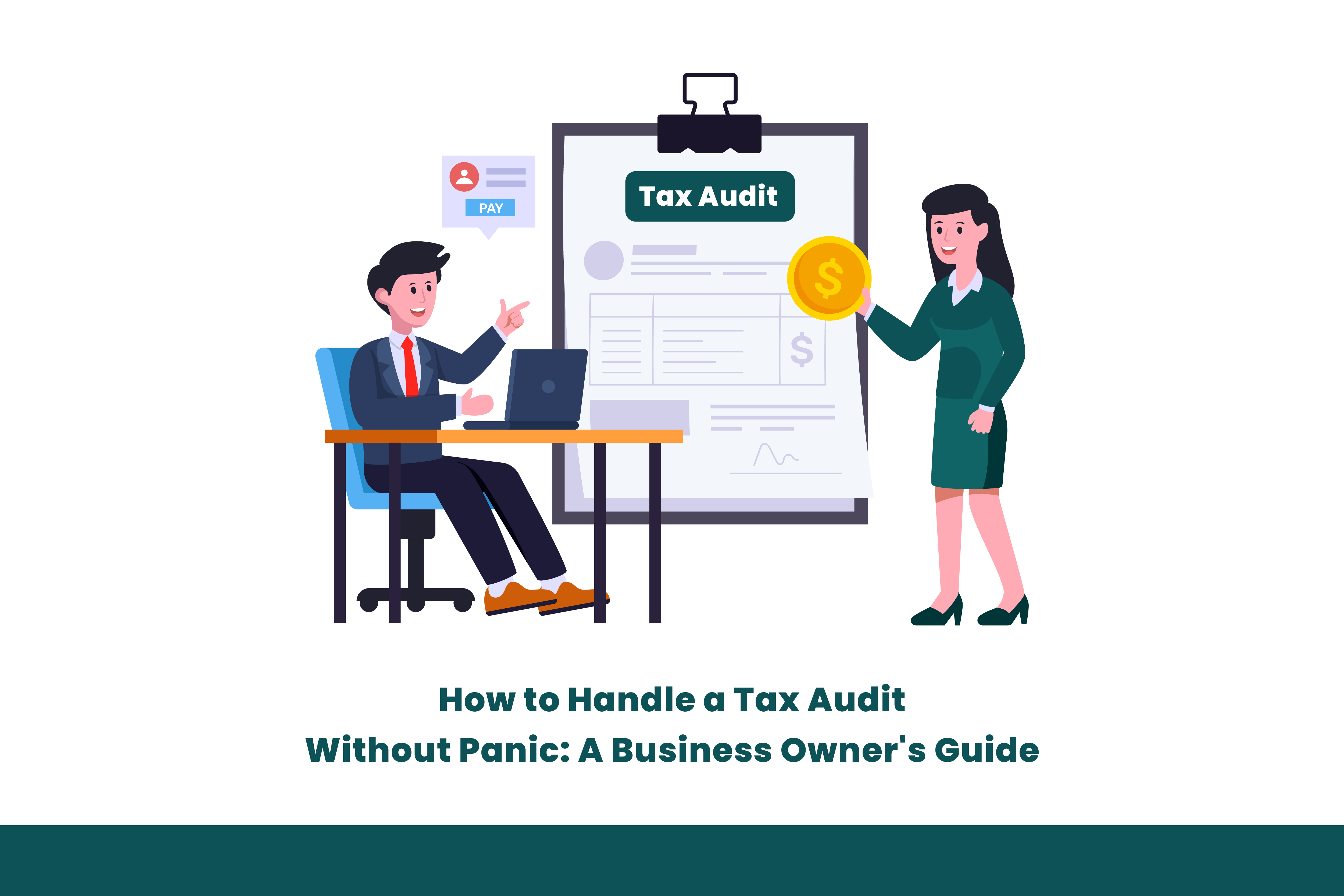
The moment a business owner hears the words “Tax Audit,” their heart skips a beat. You start wondering if you missed a receipt, filed something wrong, or if the tax department is about to turn your life upside down. That fear is completely normal. But here’s the truth most accountants won’t tell you upfront: a tax audit is not the end of the world. It’s a process. And like any process, once you understand it, the fear melts away.
This tax audit guide for business owners is written to walk you through every step calmly, clearly, and without the jargon. Whether you’re running a small shop in Lahore, a startup in London, or a mid-sized company anywhere in between, the principles are the same. Stay organized, stay honest, and stay informed.
By the time you finish reading, you’ll know exactly how to handle tax audit situations like a pro without losing sleep.
What Exactly Is a Tax Audit and Why Does It Happen?
A Tax Audit is simply an official review of your business’s financial records by the tax authority whether that’s the FBR in Pakistan, HMRC in the UK, or the IRS in the US. The goal is to confirm that the income, expenses, and taxes you reported are accurate.
It does not automatically mean you’ve done something wrong.
Audits happen for many reasons:
- Random selection by computer systems
- Mismatched figures between your filings and third-party reports
- Unusually high deductions compared to your industry
- Repeated losses year after year
- Cash-heavy business operations
- A tip-off or whistleblower report
Understanding what triggers a tax audit for businesses helps you avoid common pitfalls. Most audits are not personal they’re statistical. The system flags returns that look unusual, and a human reviewer takes a closer look.
The First Thing to Do When You Receive a Tax Audit Notice
So the letter arrives. Your hands shake a little. Take a breath. Seriously breathe.
Here’s exactly how to respond to tax audit notice without making things worse:
- Read the notice carefully. It will tell you what type of audit it is (correspondence, office, or field audit), what years are being reviewed, and what documents are needed.
- Note the deadline. Missing the response date is one of the most common tax audit mistakes business owners make.
- Don’t ignore it. Ignoring a notice turns a small problem into a massive one.
- Don’t reply emotionally. Never call the tax office in panic. Wait until you’ve read everything twice.
- Make copies of the notice and store the original safely.
That single piece of paper is the start of the entire tax audit process. How you respond in the first 7 days often shapes the entire outcome.
Why You Shouldn’t Panic: Tax Audit Anxiety Is More Common Than You Think
If you’re feeling scared of tax audit notices, you’re in good company. Tax audit anxiety is one of the top stress triggers for entrepreneurs worldwide. People imagine tax audit horror stories — businesses shut down, owners hauled to court, life savings drained.
The reality is much less dramatic.
Most audits end in one of three ways:
- No change: your records check out, and you owe nothing extra.
- Minor adjustment: you pay a small additional amount or get a refund.
- Significant adjustment: you owe more, possibly with penalties, but it’s resolvable.
The worst-case-scenario tax audit situations, criminal charges or jail time are extremely rare and only happen in cases of clear, deliberate fraud. So if you’re asking, “Can you go to jail for a tax audit?” the honest answer is: only if you intentionally lied, hid income, or forged documents. Honest mistakes lead to fines, not handcuffs.
Understanding the Different Types of Tax Audits
Not all audits are the same. Knowing what you’re facing makes business tax audit preparation far easier.
Correspondence audit handled entirely by mail. Usually for one or two specific items. The least stressful kind.
Office audit: You visit the tax office with your documents. Slightly more involved.
Field audit: the auditor visits your business premises. The most thorough type, usually reserved for larger businesses or complex cases.
Each type follows the same tax audit process explained in any official guide: notification, document review, interviews, findings, and resolution. The depth just varies.
What Documents Are Needed for Tax Audit Success?
This is where most business owners stumble. Good record keeping is your shield. Bad record keeping is your weakness.
Here’s a practical tax audit checklist for small business owners the documents you should always have ready:
- Income statements and balance sheets
- Bank statements (business and sometimes personal)
- Sales invoices and receipts
- Purchase invoices and supplier records
- Payroll records and employee tax filings
- Expense receipts (meals, travel, fuel, utilities)
- Asset purchase records and depreciation schedules
- Loan agreements and interest documentation
- Previous tax returns (usually last 3–6 years)
- Contracts with clients and vendors
- Inventory records
- Mileage logs for business vehicles
These tax audit documentation requirements form the backbone of any defense. If your records are clean, the audit becomes a formality. If they’re messy, the auditor will dig deeper.
How to Prepare for Business Tax Audit Like a Pro
Preparation is where battles are won. By the time the auditor arrives, the outcome is already 80% decided.
Here’s how to prepare for business tax audit the right way:
- Organize chronologically. Group documents by year and category. Auditors love order.
- Reconcile your bank statements with your books before they ever look at them.
- Match deductions to receipts. If you claimed it, you must prove it. Tax deduction documentation is non-negotiable.
- Prepare a written explanation for any unusual items, large one-time expenses, big refunds, or unusual losses.
- Practice your answers. Anticipate tax auditor questions to expect: “Why did revenue drop?” “What’s this $50,000 expense?” “Why is this vendor not registered?”
Don’t volunteer extra information. Answer only what’s asked. Talking too much opens new doors.
These tax audit preparation tips business owners often ignore are exactly what separates a smooth audit from a nightmare.
What Happens During the Tax Audit Process?
Many people ask what happens during tax audit process because the unknown is the scariest part. Let me demystify it.
A typical audit unfolds like this:
- Initial contact. You receive a notice or call.
- Document request. The auditor lists what they want to see.
- Review period. They examine your records, sometimes asking follow-up questions.
- Interview or site visit. They may want to meet you or visit your office.
- Findings issued. They share their proposed adjustments.
- Your response. You agree, disagree, or appeal.
Resolution. The case is closed with either no change, an adjustment, or a penalty.
So, how long does business tax audit take? Anywhere from a few weeks (for simple correspondence audits) to over a year (for complex field audits). Most small business audits wrap up within 3–6 months.
Surviving a Tax Audit: Mindset Matters More Than You Think
Surviving a tax audit isn’t just about paperwork. It’s about mindset. Auditors are humans. They notice attitude, body language, and tone.
Here’s how to handle a tax audit without stress:
- Be polite and professional. Never argue, never insult.
- Be honest. Lies always come out, and they make things ten times worse.
- Be brief. Long-winded answers create suspicion.
- Take notes. Write down what was asked, what you provided, and any commitments made.
- Ask for clarification. If you don’t understand something, ask. Never guess.
Treat the auditor like a colleague doing their job because that’s exactly what they are.
Common Red Flags That Trigger a Tax Audit
Knowing what red flags for tax audit are helps you stay below the radar without doing anything dishonest.
Common triggers include:
- Reporting consistent losses for multiple years
- Claiming 100% business use of a vehicle
- Disproportionately high entertainment or travel expenses
- Large cash transactions
- Round-number deductions (suspiciously clean figures)
- Mismatch between reported income and lifestyle
- Failing to report income from third-party platforms (banks, payment processors)
- Sudden, dramatic changes in income or deductions
- Hiring family members at unusual salaries
Some of these are also classic IRS audit triggers and apply globally FBR, HMRC, and other tax bodies use similar logic.
How to Avoid a Tax Audit as a Business Owner
You can never fully audit-proof your business, but you can dramatically reduce the risk. Here’s how to avoid tax audit scenarios as a business owner:
- File on time, every time
- Report all income even small side revenue
- Keep deductions reasonable and well-documented
- Use professional accounting software
- Reconcile accounts monthly, not yearly
- Avoid mixing personal and business finances
- Hire a qualified accountant or tax advisor
- Stay updated on tax law changes
These habits also support broader tax compliance for businesses and meet business record keeping requirements set by most tax authorities.
Do I Need an Accountant for Tax Audit Defense?
A question I hear constantly: “Do I need accountant for tax audit representation?”
Short answer yes, almost always.
Here’s why:
- Accountants speak the auditor’s language
- They know which questions are legal traps
- They can negotiate penalties down
- They handle communication so you don’t say something damaging
- They know your industry’s audit norms
Professional help for tax audit situations is rarely a luxury; it’s a smart investment. Tax audit representation services often save business owners many times their fee in reduced penalties alone. Whether you choose a CA, a CPA, a tax lawyer, or a specialized firm, having an expert on your side levels the playing field.
Tax Audit Penalties for Businesses: What’s at Stake?
Let’s talk numbers. Tax audit penalties for businesses vary widely by country, but the categories are universal:
- Late filing penalties: usually a flat fee plus interest
- Underpayment penalties: a percentage of the tax owed
- Negligence penalties: typically 20% of the underpayment
- Fraud penalties: up to 75% of the underpayment
- Criminal penalties: only in cases of intentional fraud, very rare
In Pakistan, FBR can impose hefty fines plus interest. In the UK, HMRC penalties can range from 0% to 100% depending on whether the error was careless or deliberate. The IRS in the US follows a similar tiered structure.
The good news? Honest mistakes almost always lead to lighter penalties especially if you cooperate and disclose voluntarily.
Tax Audit Pakistan Business Owners: FBR Audit Preparation Tips
If you’re a business owner in Pakistan, the Federal Board of Revenue (FBR) handles audits. FBR audit preparation has its own rhythm:
- Maintain proper books under the Income Tax Ordinance
- Keep records for at least 6 years
- Reconcile sales tax returns with income tax returns
- Use the IRIS portal correctly for all submissions
- Respond to notices through the official portal within deadlines
- Engage a tax consultant familiar with FBR procedures
Many Pakistani business owners get caught simply because they didn’t reconcile their sales tax with their income tax filings. That single mismatch is a top FBR red flag.
Tax Audit UK Small Business: HMRC Audit Guide Essentials
For UK readers, the HMRC audit guide for business owners follows a slightly different process but the principles match.
HMRC typically gives advance notice and lists exactly what records they want. Tax audit UK small business owners should:
- Keep records for at least 6 years
- Maintain digital records under Making Tax Digital (MTD)
- Respond to HMRC letters within the stated window
- Consider a tax investigation insurance policy
- Use a chartered accountant for representation
HMRC compliance checks are thorough but generally fair if you cooperate.
Financial Audit vs Tax Audit: Knowing the Difference
People often mix these up. The financial audit vs tax audit distinction matters:
- A financial audit checks whether your financial statements give a true and fair view, usually for shareholders or banks.
- A tax audit checks whether your tax filings match your actual financial activity purely for the tax authority.
- Both involve documents, but their goals are different. Financial audits look at fairness; tax audits look at compliance.
Tax Audit Statute of Limitations: How Far Back Can They Go?
The tax audit statute of limitations sets the boundary for how many years the tax authority can review.
- United States (IRS): Usually 3 years, extends to 6 years if income is significantly understated, unlimited for fraud
- United Kingdom (HMRC): 4 years for innocent errors, 6 years for careless behavior, 20 years for deliberate fraud
- Pakistan (FBR): Typically 5 years, but can be extended in fraud cases
This is why proper record keeping for at least 6–7 years is non-negotiable.
Tax Audit Defense Strategies That Actually Work
Strong tax audit defense strategies separate business owners who walk away clean from those who get crushed. Effective tactics include:
- Document everything before the audit starts
- Stick to the scope, don’t volunteer information about other years
- Use professional representation
- Request written explanations for every adjustment
- Negotiate penalties; they’re often more flexible than the tax itself
- Know your rights
Tax audit rights business owners should always remember: the right to professional representation, the right to appeal, the right to confidentiality, and the right to clear explanations.
How to Appeal a Tax Audit Decision If You Disagree
If the audit ends with findings you believe are wrong, you don’t have to accept them silently.
Here’s how to appeal a tax audit decision in most jurisdictions:
- File a formal written appeal within the deadline (usually 30–90 days)
- Provide supporting documents and legal references
- Request a meeting with a senior officer or the appeals division
- If unresolved, escalate to a tax tribunal or court
- Hire a tax lawyer for complex appeals
The tax audit resolution process exists precisely because tax authorities know they’re not always right.
How to Pass a Tax Audit Successfully: The Final Checklist
Let me wrap up the practical part with a tax audit documentation checklist that summarizes everything:
- All income sources fully reported
- Receipts matched to expenses
- Bank statements reconciled
- Payroll records complete
- Asset depreciation schedules in order
- Previous returns accessible
- Contracts and agreements filed
- Professional representation ready
- Calm, professional attitude
- Clear understanding of your rights
Follow this small business tax audit survival guide and you’ve already done more than 90% of business owners.
Here’s the rewritten paragraph, fully aligned with M Safdar’s actual positioning as a Chartered Accountancy and tax advisory firm (not a learning platform), based on the website information I gathered earlier:
How M Safdar Helps You Handle Tax Audits With Complete Confidence
Now here is where things get genuinely interesting. Tax audits in Pakistan are not just stressful because of the paperwork they are stressful because most business owners simply do not have the right team standing beside them when the FBR comes knocking. That is exactly the gap M Safdar fills.
Led by Muhammad Safdar, a Fellow Chartered Accountant of ICAP with nearly two decades of professional experience, M Safdar is your trusted partner for navigating tax audits, FBR investigations, compliance reviews, and every complex tax matter in between. Whether you are a salaried individual, an SME owner, a growing corporate, or a foreign investor doing business in Pakistan, M Safdar brings the technical expertise and practical wisdom you need to face audits with full peace of mind.
Here is how M Safdar specifically helps you with tax audit readiness:
- Pre-audit health checks: We review your books, returns, and documentation to identify and fix red flags before FBR notices them.
- Complete audit representation: From notice replies to face-to-face meetings with tax authorities, our team handles everything on your behalf.
- Strong documentation support: We help you build airtight records that hold up under the toughest scrutiny.
- FBR, PRA, SRB, and provincial compliance: One firm that handles federal and all provincial tax matters under a single roof.
- Strategic appeals and dispute resolution: If an assessment goes against you, we fight your case at every appellate level with proven success.
- Backed by leading firms: M Safdar’s strength is reinforced by partner firms TAGM (Tariq Abdul Ghani Maqbool & Co.) and MHSSCO Chartered Accountants, both ranked among the most technically robust in Pakistan.
- Tailored advisory, not templates: Every business is unique, and so is every audit; we build custom strategies, never copy-paste solutions.
- Free initial consultation: Share your concerns directly with a Chartered Accountant before you commit to anything
Whether you are trying to protect your business from a stressful audit, recover an unfair assessment, or simply want a long-term advisor who keeps you compliant year after year, M Safdar gives you the clarity, confidence, and credibility you deserve. We do not just respond to audits; we prepare you so well that audits become routine paperwork instead of business-threatening events.
Visit M Safdar today and turn your fear of tax audits into total confidence.
FAQs
Q1. What should I do the moment I receive a tax audit notice?
Read it carefully, note the deadline, gather the requested documents, and contact a qualified accountant. Don’t ignore it and don’t panic.
Q2. Can you go to jail for a tax audit?
Only in rare cases involving deliberate fraud. Honest mistakes lead to fines, not imprisonment.
Q3. How long does a business tax audit take?
Anywhere from a few weeks to over a year. Most small business audits finish within 3–6 months.
Q4. Do I really need an accountant for a tax audit?
Yes, in almost every case. Professional tax audit assistance saves money, reduces penalties, and protects your rights.
Q5. What are the biggest red flags that trigger a tax audit?
Repeated losses, unusually high deductions, cash-heavy operations, mismatched income reports, and round-number entries.
Q6. How can I avoid a tax audit as a business owner?
File on time, report all income, document deductions, keep clean records, and use a professional accountant.
Q7. What documents are needed for a tax audit?
Income statements, bank records, invoices, receipts, payroll, contracts, asset records, and previous tax returns.
Q8. What if I disagree with the audit findings?
You can file a formal appeal, present evidence, and escalate to tribunals or courts if needed.
Q9. How far back can a tax audit go?
Usually, 3–6 years for honest errors, longer for fraud cases, depending on your country.
Q10. Where can I learn tax audit skills professionally?
Msafdar offers comprehensive, updated, and affordable courses to help you master tax audits with confidence.