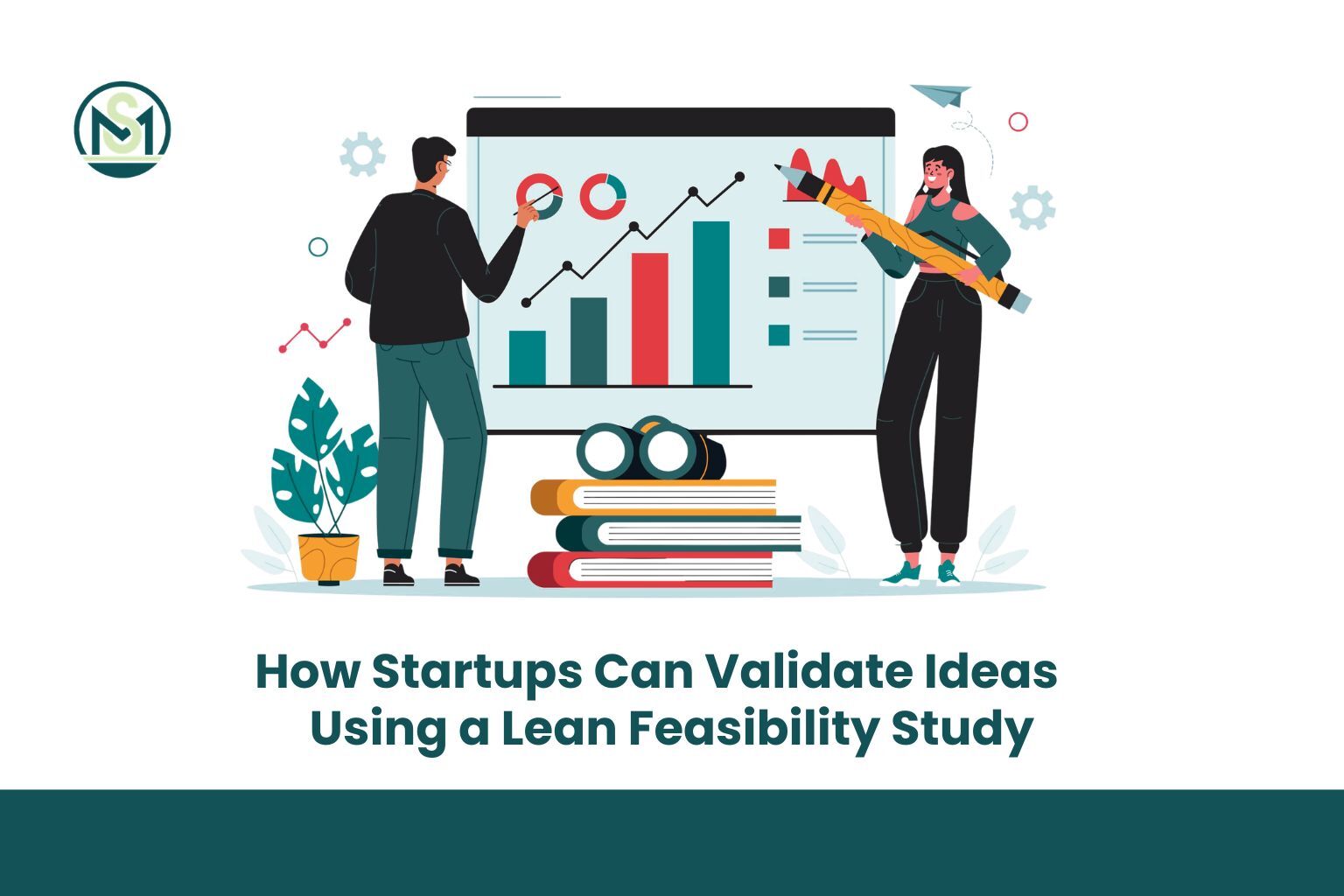
Starting With a Dream But Needing a Reality Check
Every great startup begins with a spark, an idea that feels too good to ignore. But here is the truth that most first-time founders learn the hard way: a great idea alone is not enough. The market does not care how passionate you are or how many hours you have spent dreaming about your product. What matters is whether real people have a real problem and whether your solution actually solves it. That is exactly where a Feasibility Study becomes your most powerful tool.
A Feasibility Study is not just a document you write to impress investors. When done the lean way, it becomes a practical thinking process that saves you months of wasted effort and thousands of dollars you cannot afford to lose. It helps you ask the right questions before you build anything, before you hire a developer, before you order inventory, and before you tell everyone you know that you are launching a startup.
If you have ever wondered whether your startup idea is actually worth pursuing, this guide is written for you. We are going to walk through what a lean feasibility study looks like, why it matters more than ever in today’s fast-moving markets, and how you can complete one without spending a fortune. The good news? You do not need a business degree or a boardroom to do this. You just need a clear head, some honest conversations, and the willingness to learn before you leap.
What Is a Lean Feasibility Study and Why Should Startups Care
Let us start with the basics. A traditional Feasibility Study is a formal report that businesses use to evaluate whether a project or business idea is viable. It usually covers financial projections, market analysis, technical requirements, and legal considerations. Large corporations spend weeks, sometimes months, producing these documents.
A lean feasibility study takes a different approach. It strips away the bureaucracy and focuses on the most critical questions: Is there a problem worth solving? Do people actually want this solution? Can we build it at a price people will pay? Can we reach our customers without burning through all our money?
The lean approach is rooted in the startup idea validation philosophy made famous by Eric Ries in his book on the Lean Startup methodology. The core idea is simple: instead of spending time planning in theory, you go out and test your assumptions in the real world as quickly and cheaply as possible. You treat your business idea as a set of hypotheses that need to be proven or disproven before you commit serious resources.
“The biggest risk for a startup is not running out of money. It is building something nobody wants. A lean feasibility study helps you figure that out before it is too late.”
For early-stage founders, this approach is not just helpful, it is essential. You are working with limited time, limited money, and limited bandwidth. You cannot afford to spend six months building a product only to discover that your target customers do not care. The lean feasibility study gives you a structured way to validate your idea fast, cheaply, and effectively.
The Core Elements of a Lean Feasibility Study for Startups
A lean feasibility study for startups does not need to be a hundred-page document. In fact, you could complete a solid one in a few days if you stay focused. Here are the key areas you need to cover:
1. Defining the Problem Clearly and Honestly
Before you think about your product, you need to understand the problem. This sounds obvious, but many founders skip this step. They fall in love with their solution and forget to ask whether the problem is real, painful, and frequent enough for people to pay for a fix.
During the customer discovery process, you talk directly to potential customers. Not to pitch them your idea, but to understand their world. What frustrates them? What workarounds are they currently using? How much time or money is the problem costing them? These conversations are worth more than any market research report you can buy.
Ask yourself: Is this a “nice to have” problem or a “must solve” problem? The best startup ideas solve problems that people lose sleep over. If your potential customers shrug when you describe the problem, that is an important signal.
2. Identifying Your Target Market and Its Size
Startup market research does not have to be expensive or complex at the early stage. What you need to understand is: who exactly has this problem, how many of them exist, and whether they are reachable.
You want to find your beachhead market, the smallest, most focused group of customers who have the most intense version of the problem you are solving. Do not try to serve everyone. A startup that tries to serve everyone usually ends up serving no one well.
Look at existing competitors, read industry reports, and spend time in online communities where your target customers hang out. Reddit threads, Facebook groups, LinkedIn discussions, and even Amazon product reviews can reveal what people love, hate, and wish existed.
3. Testing Your Solution Hypothesis Without Building It
Here is where the lean startup methodology really shines. You do not need to build a full product to test whether people want it. A Minimum Viable Product or MVP is the simplest version of your product that still delivers the core value. But here is the thing: your first MVP does not even have to be a real product.
Some founders use a landing page with a sign-up form to test demand. Others offer the service manually before automating anything. Some create a simple video explaining what the product does and see how many people ask to be notified when it launches. These low-cost validation methods tell you whether real interest exists without requiring you to build anything.
The goal of MVP testing is not to impress people with a polished product. The goal is to answer one question: Will people actually pay for this? Or at minimum: Will people take action to get this?
4. Evaluating the Business Model and Revenue Potential
Your idea might solve a real problem but can it make money? This is the part of the lean feasibility analysis where you think through the numbers at a basic level. What will you charge? How much does it cost to acquire a customer? What are your operating costs? How long before you can break even?
You do not need a complex financial model at this stage. What you need is what some entrepreneurs call the “napkin math” a simple back-of-the-envelope calculation that tells you whether the business can ever be profitable at scale. If the numbers look impossible before you even start, that is important information.
The lean canvas model, developed by Ash Maurya as a one-page alternative to the traditional business plan, is a great tool here. It forces you to think through your customer segments, problem, solution, unique value proposition, channels, revenue streams, cost structure, and key metrics all on a single page.
5. Assessing Your Operational and Resource Reality
Startup resource planning at the feasibility stage means being honest about what you can realistically build, who you need to build it, and how long your runway is. Many startups fail not because the idea was bad, but because they ran out of money before they found product-market fit.
What does it take to deliver your minimum viable product? What skills do you have, and what skills do you need to hire or partner for? Can you bootstrap this validation phase, or do you need outside funding? These are the kinds of questions that separate founders who survive from those who give up after six months of spinning their wheels.
A Step-by-Step Process for Running Your Lean Feasibility Study
Now that you know what to look at, here is how to actually do it in a structured way. This is an idea validation framework you can follow even if you have never done this before.
Step One: Write Down Your Core Assumptions
Before you do anything else, write down every assumption your business idea depends on being true. “People are frustrated by X.” “They would pay $Y per month for a solution.” “I can reach them through Z channel.” These are your startup hypotheses, and the goal of your feasibility study is to test the most critical ones.
Rank your assumptions by risk. Which assumption, if wrong, would kill the entire idea? Start there. Do not spend time validating assumptions that do not matter much if the big one turns out to be false.
Step Two: Go Talk to Real People
This is the most important and most skipped step. You need to have honest conversations with at least ten to twenty people who represent your target customer. Not your friends. Not your family. Real potential customers who have no reason to be nice to you.
Ask open-ended questions. Do not pitch. Just listen. Some of the most valuable feedback you will ever get comes from people saying things like “I already tried three things for that problem and nothing worked” or “That is not really the problem, the real problem is something else entirely.
This is the customer discovery process at its most raw and valuable. What you learn in these conversations should shape everything else you do.
Step Three: Design a Simple Experiment
Based on what you heard, design the cheapest possible experiment that will test your biggest assumption. This is your startup experiment design. Create a landing page, run a small paid ad campaign, offer to deliver the service manually to five customers, or build a paper prototype that simulates the experience.
Set a clear success metric before you start. What result would make you confident enough to move forward? What result would tell you to pivot or stop? Without a pre-defined threshold, you will always find ways to rationalize whatever result you get.
Step Four: Run the Experiment and Collect Data
Running your experiment for a defined period, usually one to four weeks, is enough for an early validation test. Collect data. Track sign-ups, conversion rates, response rates, or whatever metric matters most for your hypothesis.
This is market demand testing in action. You are not looking for perfection. You are looking for signal. Is there enough signal to justify continuing?
Step Five: Analyze Results and Decide
Once your experiment is done, sit down and look at what actually happened, not what you hoped would happen. Did you hit your success metric? What surprised you? What confirmed your assumptions? What challenged them?
Now you have three options: persevere (the results are positive and you move forward), pivot (the results revealed a different problem or customer segment worth pursuing), or stop (the results show there is not enough demand to justify the risk). This is the startup pivoting strategies moment, and it takes courage to make an honest call.
The goal of a lean feasibility study is not to prove you are right. It is to find the truth as quickly and cheaply as possible even if that truth is disappointing.
Common Mistakes Startups Make During Idea Validation
Even founders who understand the lean approach often fall into traps that undermine their feasibility study. Here are the most common ones to avoid:
- Talking to the wrong people. Friends and family will tell you what you want to hear. You need honest feedback from strangers who have no emotional investment in your success.
- Asking leading questions. If you ask “Don’t you think this would be useful?” you are going to get a lot of people saying yes. Ask open questions instead: “How do you currently deal with this problem?”
- Confusing enthusiasm with commitment. Someone saying “That sounds great, I would definitely use that!” is not the same as someone paying you $50 or giving you their email address. Look for real behavioral signals.
- Skipping the numbers. You can validate the problem without checking if the business can be profitable. But if the economics do not work, you are building a hobby, not a startup.
- Spending too long in validation mode. Some founders use validation as an excuse to avoid building. Set a timeline for your feasibility phase and commit to making a decision by the end of it.
How a Lean Feasibility Study Reduces Startup Risk
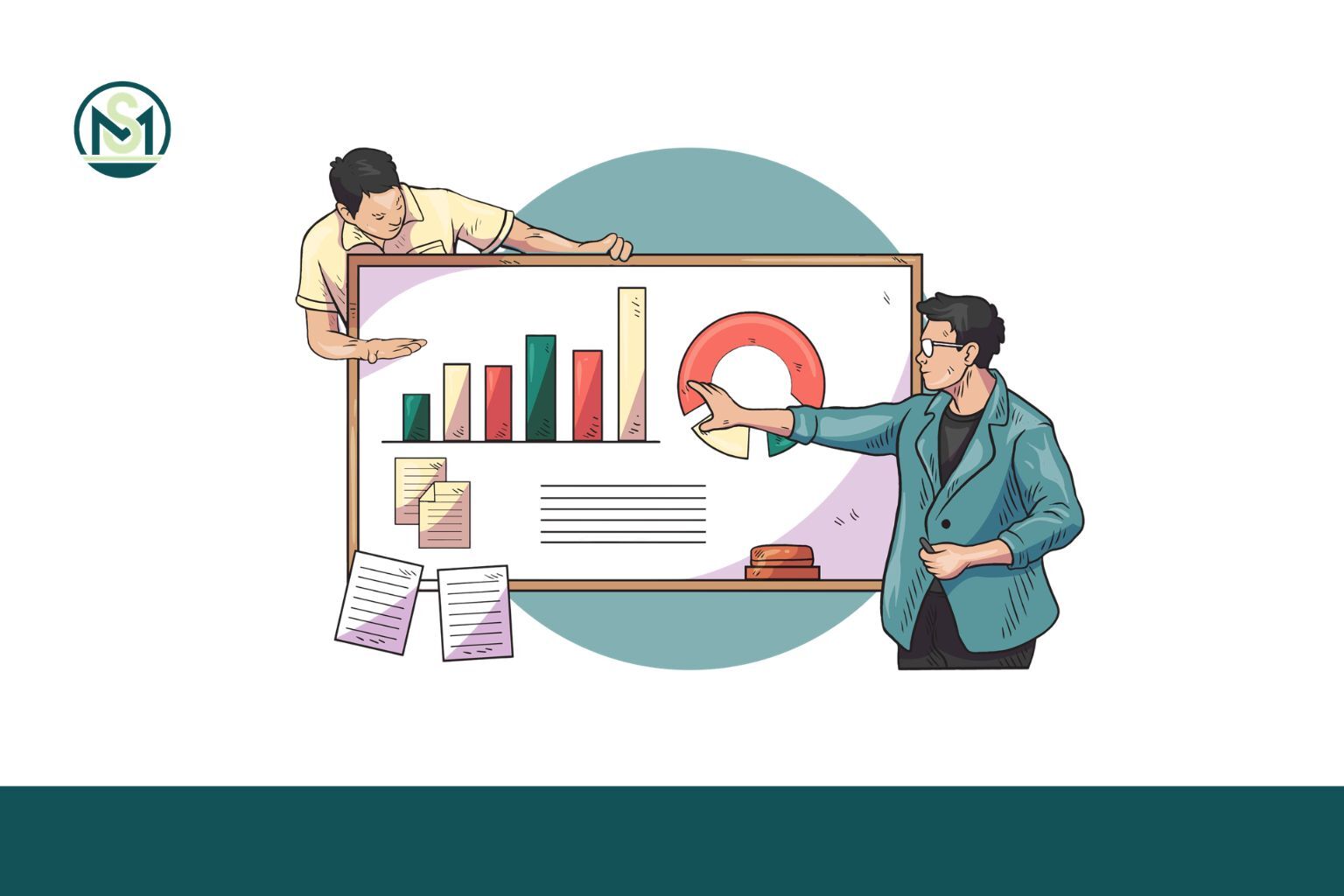
The whole point of lean feasibility analysis is startup risk assessment done early, before the stakes get too high. Here is what you reduce when you validate your idea before building:
Financial risk. You spend a few hundred dollars on experiments instead of tens of thousands on a product nobody wants. According to CB Insights, one of the top reasons startups fail is building something the market does not need. A lean feasibility study directly addresses this.
Time risk. Twelve months of building the wrong thing is twelve months of your life you cannot get back. Early validation keeps you from going down a dead-end road.
Opportunity risk. When you are stuck building something that is not working, you are not available to spot the pivot or the adjacent opportunity that might actually succeed. Fast validation keeps your options open.
Emotional risk. Failing after two years of all-in effort is devastating. Failing after two weeks of lean experimentation is just learning. The lean approach helps you fail fast, learn faster, and stay in the game longer.
Real-World Examples of Lean Validation Done Right
Some of the most successful startups in the world started with ultra-lean validation before they ever wrote a single line of code.
Dropbox, before building anything, created a simple explainer video showing what the product would do. The video got hundreds of thousands of sign-ups overnight proof enough that people wanted it. That is market demand testing at its most elegant.
Zappos, now a billion-dollar company, started by the founder taking photos of shoes at local stores, posting them online, and buying the shoes at full price when someone ordered. He never held any inventory until he knew people would buy. That is bootstrap validation techniques at their best.
Airbnb launched by renting out air mattresses in their own apartment during a conference when hotels were full. They wanted to test if anyone would pay to stay in a stranger’s home before building a platform. The answer was yes.
These examples prove that a Feasibility Study does not need to be a formal document. It is a mindset a commitment to testing before building, learning before spending, and validating before scaling.
How Msafdar Can Help You Launch Smarter and Validate Faster
You now have a solid understanding of how to run a lean feasibility study for your startup. But knowing what to do and actually doing it well are two different things. This is where working with the right expert makes all the difference.
Msafdar specializes in helping early-stage startups and solo entrepreneurs cut through the noise and build real validation systems that produce clear, actionable answers. Whether you are still sitting on a raw idea, have already started building and feel unsure, or have tried to launch once and want to do it smarter this time Msafdar brings the experience, frameworks, and honest feedback that founders need most.
Here Is Exactly What Msafdar Brings to the Table
- Custom lean feasibility study frameworks tailored to your specific industry and business model, not generic templates.
- Customer discovery coaching that helps you design the right questions, find the right respondents, and extract insights that actually change your direction.
- MVP design strategy helps you figure out the simplest, cheapest version of your product or service that will still give you real validation data.
- Lean canvas model workshops that help you map your entire business model on one page, identify the riskiest assumptions, and prioritize what to test first.
- Go-to-market validation planning so that when you are ready to launch, you know exactly who to target, how to reach them, and what success looks like from day one.
- Startup viability assessment with honest, data-driven feedback, because sometimes the most valuable thing an advisor can do is help you see a critical flaw before it becomes a catastrophic mistake.
Msafdar has helped founders across multiple sectors, from SaaS tools to consumer products to service-based businesses, move from uncertain ideas to validated concepts with real customer interest. The process is collaborative, practical, and designed to respect your time and resources.
You do not need to figure this out alone. The right guidance at the feasibility stage can save you years of trial and error and thousands of dollars in misdirected effort. Msafdar is here to help you do this the smart way.
If you are serious about building something people actually want, reach out to Msafdar today. A single focused conversation about your idea could be the most valuable investment you make in your startup’s future.
Validate First, Build Second, Succeed Faster
The startup world is full of cautionary tales, brilliant founders with genuine passion who built things nobody wanted. The painful truth is that most of those failures were preventable. A lean feasibility study, done early and done honestly, can be the difference between a startup that makes it and one that becomes a cautionary tale.
You now have the tools. You know how to define the problem, research the market, test your solution without building it, evaluate the business model, and make decisions based on real data rather than assumptions. You know the common mistakes to avoid and the mindset shifts that separate smart founders from stubborn ones.
Remember this: the goal of a Feasibility Study is not to confirm that your idea is great. The goal is to find out whether your idea is true. If it is, you have just saved yourself months of uncertainty. If it is not, you have just saved yourself something even more precious, the chance to find an idea that actually is.
FAQ
Q1: What is the difference between a traditional feasibility study and a lean feasibility study?
A traditional feasibility study is a comprehensive formal document that takes weeks to produce and covers every aspect of a business in deep detail. A lean feasibility study is a faster, more focused approach that prioritizes testing your biggest assumptions with real-world experiments before committing significant time or money. For early-stage startups, the lean approach is almost always more practical and more useful.
Q2: How long does a lean feasibility study take to complete?
Depending on the complexity of your idea and the accessibility of your target market, a lean feasibility study can be completed in as little as one to four weeks. The goal is speed and clarity, not perfection. You are trying to get enough information to make a confident decision, not write a dissertation.
Q3: Do I need a technical background to validate a tech startup idea?
Absolutely not. Many of the best early-stage validations happen before a single line of code is written. Tools like landing pages, mockups, manual service delivery, and direct customer interviews require no technical skills at all. What matters is your ability to ask good questions and listen carefully to the answers.
Q4: What if my validation results are mixed or unclear?
Mixed results are actually very common and quite valuable. They often mean you are targeting the wrong segment, solving a secondary problem instead of the primary one, or pricing your solution incorrectly. Go back and talk to more potential customers and ask deeper questions. Mixed signals are an invitation to refine, not a reason to quit.
Q5: Can I validate a service-based business the same way as a product-based one?
Yes, and in many ways it is even easier. Service-based businesses can be validated by offering the service manually to a small group of early customers before investing in any infrastructure or automation. If people pay you for the service and come back for more, that is strong validation. If they do not, you have learned something critical at very low cost.
Q6: How many customers do I need to interview to validate my startup idea?
There is no magic number, but most lean startup practitioners suggest that patterns start to emerge after ten to fifteen honest conversations with your target customer. If you are hearing the same frustrations and desires repeated across multiple unrelated interviews, you are getting a genuine signal. If every conversation is wildly different, you may need to narrow your target segment.
Q7: What happens if my feasibility study shows the idea will not work?
This is actually a success, not a failure. Finding out early that an idea does not have enough market demand or cannot be built profitably is one of the best possible outcomes of a feasibility study. It frees you to pivot to a better idea, a better market, or a better business model before you have committed serious resources. The lean approach treats this as a learning, not a loss.