
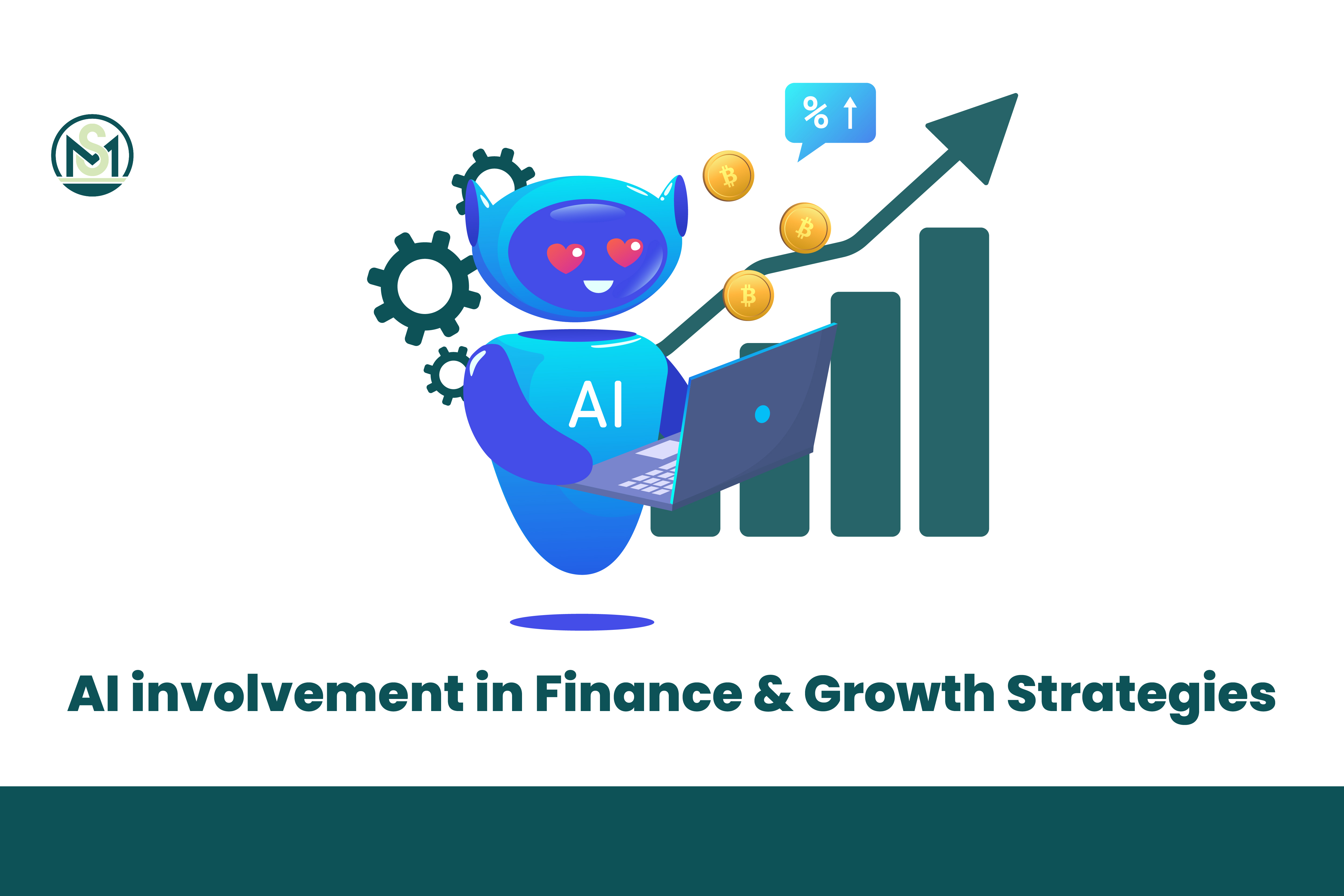
Finance is no longer just about balance sheets, historical reports, and year-end reviews. Today, businesses are operating in a faster, more complex environment where decisions must be made quickly, accurately, and with confidence. This is where Finance & Growth Strategies are evolving,and artificial intelligence is playing a central role in that transformation.
Modern Finance & Growth Strategies are no longer reactive. They are predictive, data-driven, and forward-looking. AI is helping businesses understand not only where they stand today, but where they are heading tomorrow. From smarter budgeting to intelligent risk control, AI is reshaping how companies grow, compete, and stay financially healthy.
Why Finance & Growth Strategies Are Changing So Rapidly
Traditional financial planning relied heavily on historical data and manual interpretation. While that approach worked in stable markets, it struggles in today’s environment where economic conditions, customer behavior, and operational costs can shift overnight.
Businesses now need:
- Faster insights
- More accurate forecasting
- Better risk visibility
- Smarter decision support
This demand has pushed organizations toward AI in finance, where automation and machine learning help transform raw data into clear, actionable insight.
It becomes clear that Finance & Growth Strategies are no longer optional upgrades ,they are essential survival tools for modern businesses.
Understanding AI in Finance in Simple Terms
At its core, AI in finance means using technology that can learn from data, identify patterns, and support better financial decisions without constant human intervention.
Instead of manually analyzing thousands of transactions, AI systems can:
- Detect trends
- Flag unusual activity
- Predict future outcomes
- Suggest smarter actions
This is why artificial intelligence in financial services has moved from experimentation to everyday use across banking, corporate finance, investment management, and advisory services.
How Artificial Intelligence Is Transforming Financial Services
Artificial intelligence in financial services has quietly become part of daily operations across industries. It improves accuracy, reduces human error, and allows finance teams to focus on strategy instead of spreadsheets.
Key areas where AI is making an impact include:
- Automated accounting and reconciliations
- Real-time financial reporting
- Credit risk assessment
- Fraud detection
- Personalized financial insights
These changes are not about replacing people. They are about freeing professionals from repetitive work so they can focus on higher-value decision-making.
AI-Driven Growth Strategies: Turning Data into Direction
Growth is no longer driven by instinct alone. AI-driven growth strategies help businesses understand what is working, what is not, and where the next opportunity lies.
AI systems analyze:
- Customer behavior
- Market trends
- Sales performance
- Cost structures
By connecting these insights, companies can develop data-driven growth strategies that are realistic, measurable, and scalable.
Instead of guessing which product to expand or which market to enter, leaders can make decisions supported by real evidence.
Financial Automation Using AI: Less Manual Work, More Control
One of the most practical benefits of AI is financial automation using AI. Tasks that once took days or weeks can now be completed in minutes.
Examples include:
- Automated invoice processing
- Expense categorization
- Cash flow tracking
- Compliance checks
This level of automation improves accuracy and gives finance teams real-time visibility into financial health, supporting smarter financial growth optimization.
Machine Learning in Finance: Learning from Patterns, Not Assumptions
Machine learning in finance allows systems to improve over time. The more data they process, the better they become at spotting patterns and predicting outcomes.
This is especially useful in:
- Revenue forecasting
- Credit scoring
- Expense trend analysis
- Customer profitability modeling
By learning continuously, AI systems adapt as the business grows and market conditions change.
AI-Powered Financial Analysis: Seeing the Full Picture
Traditional analysis often looks backward. AI-powered financial analysis looks forward.
AI tools can:
- Combine multiple data sources
- Identify hidden correlations
- Highlight early warning signs
- Provide scenario-based insights
This enables leadership teams to act before problems escalate and capitalize on opportunities earlier than competitors.
AI for Business Growth: Finance as a Strategic Partner
Finance teams are no longer just record keepers. With AI for business growth, finance becomes a strategic driver of expansion.
AI helps align:
- Financial planning
- Operational performance
- Sales strategies
- Investment priorities
When finance is connected to growth planning, businesses scale with clarity rather than chaos.
Predictive Analytics in Finance: Planning Before Problems Appear
Predictive analytics in finance uses historical and real-time data to anticipate future outcomes.
This includes:
- Forecasting cash shortages
- Predicting demand fluctuations
- Identifying cost overruns early
Instead of reacting to surprises, businesses can plan ahead and protect profitability.
AI Investment Strategies: Smarter Capital Allocation
Capital allocation is one of the most critical decisions a business makes. AI investment strategies support better choices by analyzing risk, return, and timing.
AI helps:
- Compare multiple investment scenarios
- Identify underperforming assets
- Optimize portfolio balance
This results in more disciplined, evidence-based investment decisions.
Fintech AI Solutions: Powering the Modern Finance Stack
Many businesses adopt AI through fintech AI solutions rather than building systems from scratch.
These tools offer:
- Automated financial dashboards
- Intelligent budgeting systems
- Real-time risk monitoring
- AI-enabled forecasting
They allow even small and mid-sized businesses to access enterprise-level financial intelligence.
AI Financial Forecasting: Accuracy That Improves Over Time
AI financial forecasting goes beyond static projections. It continuously updates forecasts as new data becomes available.
Benefits include:
- More reliable revenue projections
- Better cost control
- Faster response to market shifts
This adaptability is essential for sustainable growth.
Intelligent Risk Management: Protecting Growth Before It Breaks
Risk is unavoidable, but unmanaged risk is dangerous. Intelligent risk management uses AI to identify, assess, and prioritize financial risks.
AI supports:
- Credit risk evaluation
- Fraud detection
- Liquidity risk monitoring
This proactive approach safeguards long-term Finance & Growth Strategies.
AI in Corporate Finance: Smarter Internal Decisions
AI in corporate finance improves how organizations manage capital structure, budgeting, and performance evaluation.
It helps leaders:
- Optimize working capital
- Improve budgeting accuracy
- Evaluate financial performance objectively
This leads to more confident and transparent decision-making.
AI-Enabled Decision Making: Confidence Backed by Data
With AI-enabled decision making, leaders no longer rely solely on instinct.
AI provides:
- Clear insights
- Scenario analysis
- Risk-adjusted recommendations
This results in faster, smarter, and more defensible decisions.
Financial Growth Optimization Through AI
Growth without control can destroy value. Financial growth optimization ensures expansion is profitable, sustainable, and aligned with strategy.
AI supports this by:
- Monitoring margins
- Identifying inefficiencies
- Aligning costs with growth
AI and Digital Transformation: Finance at the Core
AI and digital transformation go hand in hand. Finance is often the starting point because financial data touches every part of the business.
AI connects finance with:
- Operations
- Sales
- Strategy
- Risk management
This creates a unified, insight-driven organization.
Smart Financial Planning for Long-Term Stability
Smart financial planning powered by AI allows businesses to think long-term while managing short-term realities.
It supports:
- Scenario planning
- Stress testing
- Sustainable budgeting
AI Tools for Finance: Practical, Not Complex
Modern AI tools for finance are designed to be user-friendly. They provide dashboards, alerts, and insights without requiring technical expertise.
This makes advanced finance accessible across the organization.
The Future of AI in Finance
The future of AI in finance is not about replacing professionals. It is about empowering them.
We will see:
- Deeper integration with business strategy
- More real-time financial intelligence
- Greater personalization in financial insights
- Businesses that embrace AI today will lead tomorrow.
Using AI to Connect Financial Data with Business Reality
Financial numbers only tell part of the story when viewed in isolation. AI bridges the gap between numbers and real-world operations by connecting financial data with sales, marketing, supply chain, and customer behavior.
Through AI-powered financial analysis, businesses can see how operational decisions affect profitability in real time. For example, pricing changes, supplier delays, or customer churn can immediately be reflected in financial projections. This creates tighter alignment between strategy and execution.
When finance reflects real business activity instead of static reports, decision-making becomes more grounded and effective.
The Role of AI in Managing Uncertainty and Volatility
Markets today are unpredictable. Inflation, interest rates, currency fluctuations, and geopolitical risks can quickly disrupt even the best-laid plans. AI helps businesses respond to uncertainty with clarity instead of panic.
By using predictive analytics in finance, organizations can model different scenarios and understand potential outcomes before they happen. This allows leaders to prepare contingency plans rather than reacting after damage is done.
AI does not eliminate uncertainty, but it significantly reduces blind spots. That visibility is critical for sustainable Finance & Growth Strategies in unstable environments.
Smarter Cost Management Without Sacrificing Growth
Cost-cutting is often treated as the opposite of growth, but AI changes that narrative. Instead of across-the-board reductions, AI identifies where costs are inefficient and where spending actually supports growth.
Through financial automation using AI, businesses gain granular visibility into expenses, vendor performance, and operational waste. This allows companies to reduce unnecessary costs while continuing to invest in high-impact areas.
The result is leaner operations that still support expansion ,a key component of long-term financial health.
AI and Better Cash Flow Discipline
Cash flow remains one of the most common reasons businesses struggle or fail. AI improves cash flow management by making inflows and outflows more predictable.
Using AI financial forecasting, companies can anticipate payment delays, seasonal fluctuations, and funding gaps well in advance. This enables proactive actions such as adjusting credit terms, renegotiating supplier contracts, or securing short-term financing early.
Better cash flow control strengthens overall financial growth optimization and reduces stress across the organization.
Aligning Growth Ambitions with Financial Reality
Many growth plans fail not because the idea is bad, but because financial capacity is misunderstood. AI helps align ambition with reality by providing accurate, data-backed insights.
With AI-enabled decision making, leadership teams can test growth ideas against financial constraints before committing resources. Expansion plans, hiring decisions, and capital investments can be evaluated objectively rather than emotionally.
This balance between ambition and discipline is what separates sustainable growth from reckless expansion.
Ethical and Responsible Use of AI in Finance
As AI becomes more embedded in finance, responsible use becomes essential. Financial decisions affect employees, customers, investors, and regulators. AI systems must be transparent, fair, and well-governed.
Businesses adopting AI in corporate finance must ensure that models are explainable and decisions can be justified. Human oversight remains critical, especially for high-stakes decisions such as lending, investment, and risk assessment.
Responsible AI builds trust ,and trust is a foundation of long-term growth.
Preparing Organizations for an AI-Driven Financial Future
Adopting AI is not just a technology upgrade; it is a mindset shift. Organizations must prepare their teams, processes, and culture for AI-supported finance.
This includes:
- Upskilling finance teams to interpret AI insights
- Updating internal controls and governance
- Integrating AI tools into existing workflows
As AI and digital transformation continue to accelerate, businesses that invest in readiness today will adapt faster tomorrow.
Why AI Is Becoming a Competitive Advantage in Finance
In competitive markets, small advantages compound over time. Faster insights, better forecasts, and smarter risk management give AI-enabled organizations a measurable edge.
Companies that integrate AI into their Finance & Growth Strategies gain:
- Faster response times
- More confident decision-making
- Stronger financial discipline
Over time, this advantage translates into resilience, profitability, and sustained growth.
How Msafdar Guides Finance Teams Through AI-Led Growth and Transformation
One of the most noticeable shifts driven by AI is the changing role of finance teams themselves. Finance professionals are no longer limited to reporting numbers or closing books at month-end. With AI supporting routine analysis, finance teams are stepping into advisory and strategic roles.
We support you with:
- AI-supported financial planning and forecasting
- Growth-focused financial structuring
- Risk-aware decision frameworks
- Smart automation for finance operations
AI tools help finance teams spend less time collecting data and more time interpreting it. This shift strengthens Finance & Growth Strategies because financial leaders are now involved earlier in business planning, product decisions, and expansion discussions. Instead of being asked, “Can we afford this?”, finance teams are now helping answer, Is this the smartest way to grow?
This evolution makes finance a central pillar of long-term growth rather than a back-office function.
FAQs
How does AI improve Finance & Growth Strategies?
AI improves accuracy, speed, and foresight by turning financial data into predictive insights and actionable plans.
Is AI in finance only for large companies?
No. Many fintech AI solutions are designed for small and mid-sized businesses as well.
Can AI replace finance professionals?
No. AI supports professionals by automating routine work and enhancing decision-making, not replacing human judgment.
Is AI financial forecasting reliable?
Yes, especially when combined with expert oversight. Forecasts improve over time as systems learn from new data.
How can a business start using AI in finance?
Start with automation and forecasting tools, then expand into predictive analytics and growth planning with expert guidance.